

Reading
At Holy Family, we use a whole-class mastery model for reading to ensure all pupils have access to high-quality texts, promoting equity and fostering a love of literature. The curriculum adopts a structured weekly cycle focusing on key reading skills such as prediction, retrieval, inference, and vocabulary development. Lessons are discussion-based, encouraging collaboration and supporting deeper understanding of texts. Vocabulary is explicitly taught and progression is carefully built into the scheme, enabling children to move from novice to expert readers. This approach ensures pupils develop fluency, comprehension and confidence while engaging meaningfully with a wide range of texts.
Intent
At Holy Family, we ensure that all pupils embark on a rich reading journey that enables them to become fluent, confident and enthusiastic readers by the end of Year 6. Reading is at the heart of our curriculum, and we strive to foster a lifelong love of reading in every child. Our aim is for children to leave Holy Family with secure decoding skills, a deep understanding of texts and a wide-ranging vocabulary, enabling them to access the full curriculum and the world beyond school.
Implementation
Early Reading and Phonics
Our reading journey begins in the Early Years Foundation Stage, where children receive daily, systematic synthetic phonics teaching using the Little Wandle Letters and Sounds Revised programme. This phonics programme is continued throughout Key Stage 1 and into Key Stage 2 for those who require additional support. Children read fully decodable books matched to their phonics phase, helping to embed decoding skills and build reading confidence.
Reading After Phonics
This approach is designed to develop reading fluency, comprehension and vocabulary knowledge through a whole-class, mastery model. From Year 3 to Year 6, once the children have secure early reading skills, all pupils participate in daily 30-minute lessons focusing on:
- Reading aloud and listening to high-quality, diverse core texts.
- Explicit vocabulary instruction to enhance word knowledge and usage.
- Shared discussion of comprehension strategies, such as predicting, inferring, summarising and retrieving.
- Guided and independent practice with comprehension questions.
The structure ensures that all children receive equitable exposure to high-quality texts, reading strategies and rich discussions.

We take a systematic and structured approach, aligned with the National Curriculum for English (2014, updated 2021), which states that pupils should develop the habit of reading widely and often, for both pleasure and information.
Reading Strategies
Our core reading strategies are derived directly from the National Curriculum and include:
- Prediction
- Retrieval
- Inference
- Vocabulary
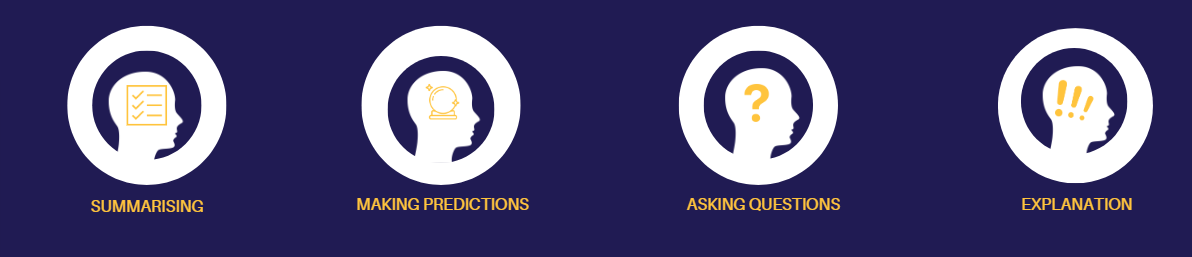
Children become active readers, capable of analysing and discussing texts critically. They also develop speaking and listening skills, which underpin their ability to express ideas and engage in collaborative learning. Teachers receive regular CPD and termly coaching sessions to ensure high-quality reading instruction is consistent and impactful.
Our chosen books
At Holy Family Catholic Primary School, we have carefully curated a high-quality range of texts to ensure that every child develops a genuine love of reading while engaging with rich language, diverse characters and meaningful themes. Our reading choices reflect the values and mission of our school: we aim to nurture academic achievement alongside kindness, empathy, creativity and moral development. Each text is selected for its ability to broaden children’s horizons, spark curiosity and support their emotional and social growth. Through a balanced mix of classic literature, contemporary stories and culturally diverse voices, we provide pupils with opportunities to explore different worlds, perspectives and experiences. In doing so, we aim to develop confident, thoughtful readers who read both for pleasure and for learning.
We believe that offering a rich and varied selection of books is fundamental to fostering a lifelong love of reading. As our library continues to grow, we ensure that children have access to texts that reflect their interests, challenge their thinking, and deepen their understanding of the world. Research highlights the significant impact of daily reading on pupil progress. Therefore, every class has a designated storytime text chosen for its quality, accessibility and appeal. When teachers read aloud, all pupils, including our spotlight children, are fully immersed in language-rich storytelling and benefit from shared reading experiences that model fluency, expression and comprehension.
To further strengthen reading for pleasure, we are developing our book corners so that children can explore additional texts by the same author or within similar genres. This encourages independent reading and helps pupils make meaningful connections between books. Our storytime curriculum ensures that children are transported to different cultures, experiences and storylines, while also seeing themselves represented in the literature they encounter. With the support from the SLS team, we are able to provide our children with new and exciting literature.
The impact of this approach is evident across the school. Pupils talk enthusiastically about the books they hear, many request copies for home and even our hardest-to-reach readers are becoming increasingly engaged. Families report children asking to buy class novels or choosing to spend birthday money on books they have enjoyed in school. This growing culture of reading demonstrates the success of our approach and reflects our commitment to ensuring that every child becomes a motivated, skilled reader.
Accelerated Reader
Accelerated Reader (AR) is a whole‑group reading management and monitoring programme that aims to motivate children to read by guiding them to books that are just right for them and promoting rewards for their progress. Children can then build on their reading skills and enjoy reading, becoming confident, independent readers who read for pleasure.
AR is supported by scientifically based research. An extensive body of research confirms the effectiveness of Accelerated Reader, along with best classroom practices, in helping teachers dramatically improve children’s reading skills. The research consistently demonstrates that Accelerated Reader enables teachers to target instruction and accelerate reading growth for children of all ability levels.
Accelerated Reader is not designed to teach reading skills or replace any other methods of reading in school. Instead, it supports and enhances reading practice. AR guides children to books at a difficulty level that is right for them, providing motivation and enjoyment, which leads to greater acquisition of reading skills.
Children begin by taking a STAR Reading test. This is a computer‑based reading assessment programme that uses computer‑adaptive technology. Questions continually adjust to your child’s responses. If the child answers correctly, the difficulty level increases; if the child cannot answer a question or answers incorrectly, the difficulty level decreases. The test uses multiple‑choice questions and takes approximately 10–15 minutes to complete. The completed STAR Reading test then determines your child’s reading age, book level, and ZPD (Zone of Proximal Development). Children then choose a book at their own level and read it at their own pace.
What is a ZPD (Zone of Proximal Development)?
A ZPD is the range of books that will challenge a child without causing frustration or loss of motivation. Your child will receive a ZPD after taking a STAR Reading test. It is important for children to read with a high degree of comprehension and within their ZPD. Teachers can adjust ZPDs based on the needs and abilities of each child.
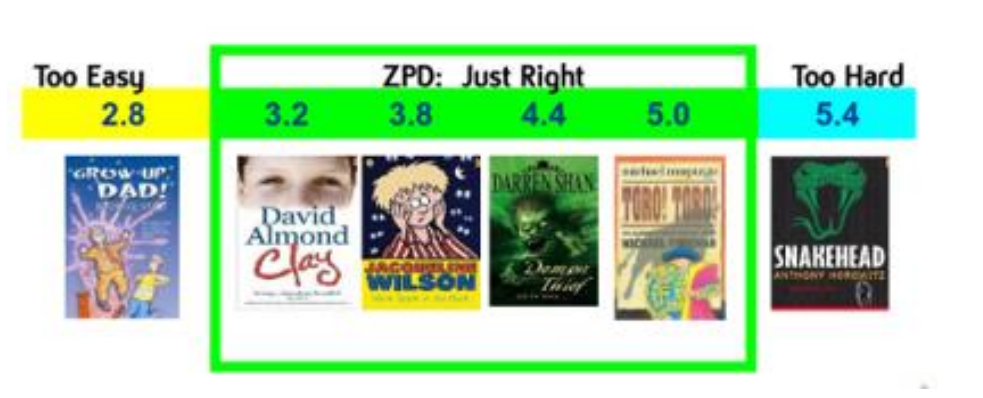
Your child’s ZPD will look something like this: 3.6–4.2. This gives a range in which your child will read most comfortably while still being challenged. Levels move from 0.1 through to above 10. All books in school are associated with AR and have a coded label on the front cover so that children can easily see the level of the book they are considering.
Once they have finished reading the book, they will take a short quiz. Quizzing allows children to earn points depending on their scores, tests their comprehension, vocabulary, and higher‑order literacy skills, and enables teachers to monitor their progress.
Reading for Pleasure
Reading for pleasure is promoted throughout the school in a variety of meaningful ways:
-
Daily story time in every classroom
-
Regular access to our well-stocked school library
-
Inviting and comfortable class book corners
-
Peer reading across year groups
-
Author visits, World Book Day and Scholastic Book Fairs
-
Whole school reading challenges and themed events
We believe that reading should be a joyful and shared experience. Through carefully chosen books and high-quality discussions, children develop empathy, curiosity, and a deeper understanding of the world around them.
The Importance of Literacy
"Literacy is the ability to read, write, speak and listen in a way that lets us communicate effectively and make sense of the world. From their earliest years, literacy skills help children to develop and communicate."- The National Literacy Trust
At Holy Family, we recognise that reading is fundamental to academic success and personal development. We strive to ensure that all children become literate, articulate, and independent thinkers who can navigate the challenges of an ever-changing world.
We encourage reading for enjoyment by:
- Reading aloud to children daily
- Providing access to a diverse range of authors, genres and cultures
- Encouraging reading at home through reading records and parent workshops
- Celebrating children's reading achievements
- Offering recommended book lists for each year group
Teachers have a deep knowledge of children’s literature and use this to inspire pupils, model enthusiastic reading behaviours, and integrate texts meaningfully into all areas of the curriculum.
Impact
The impact of our Reading can be seen in the pupils’ ability to speak, discuss and read confidently and effectively. It can be seen in the writing the children produce and, in our reading
and writing results across the school and across each subject level.
Recommended book lists for each age group:
The Reader Teacher | Children's Books | Reads, Reviews & Recommendations